.png)





.jpg)
Online
TUCSSYM WEBINAR
Innovations in Deep Excavation & TBM Robotics
Thursday, 29th October 2026
6pm to 7pm, Teams
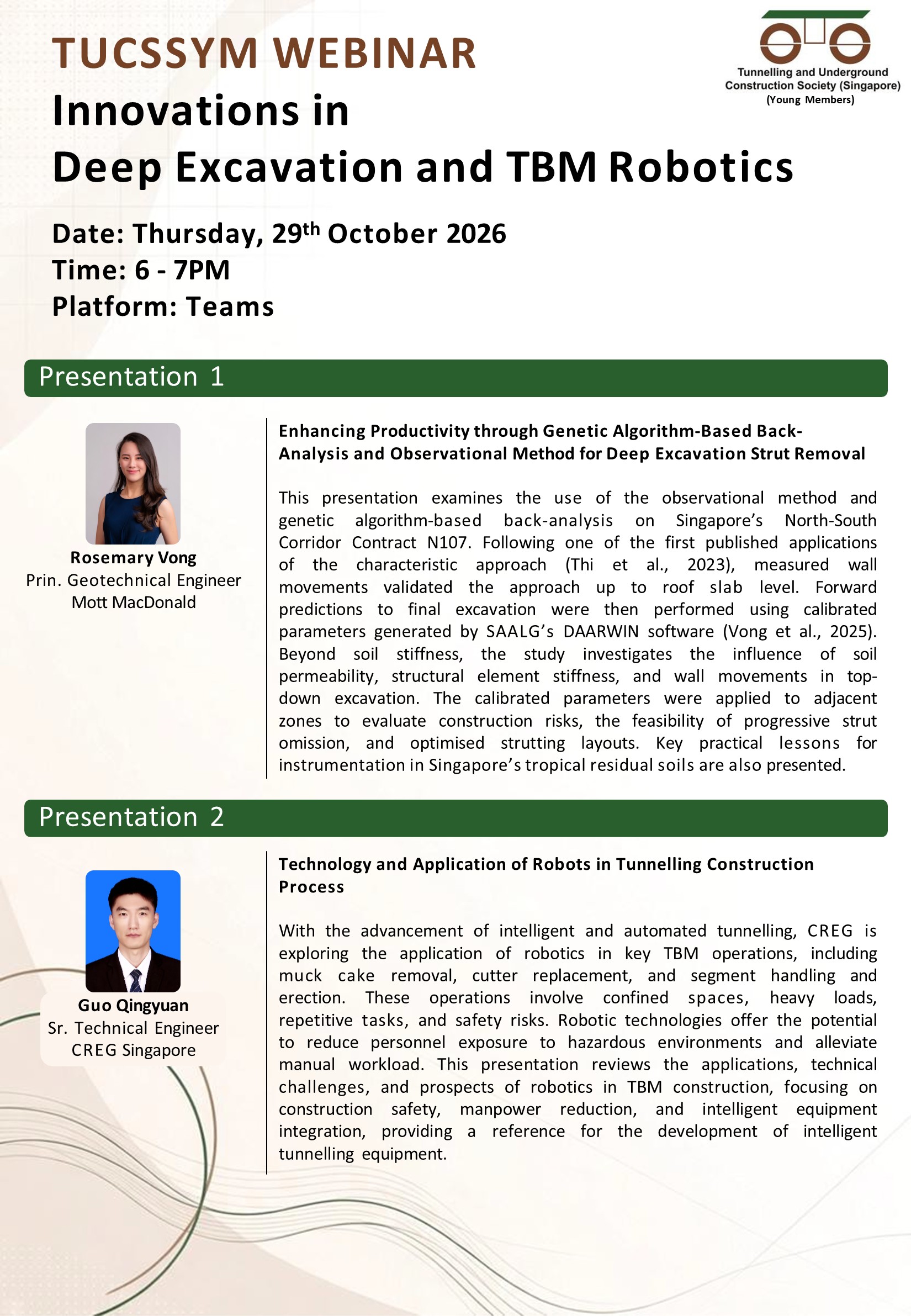
Presentation 1 - Enhancing Productivity through Genetic Algorithm-Based Back-Analysis and Observational Method for Deep Excavation Strut Removal
This presentation examines the use of the observational method and genetic algorithm-based back-analysis on Singapore’s North-South Corridor Contract N107. Following one of the first published applications of the characteristic approach (Thi et al., 2023), measured wall movements validated the approach up to roof slab level. Forward predictions to final excavation were then performed using calibrated parameters generated by SAALG’s DAARWIN software (Vong et al., 2025). Beyond soil stiffness, the study investigates the influence of soil permeability, structural element stiffness, and wall movements in top-down excavation. The calibrated parameters were applied to adjacent zones to evaluate construction risks, the feasibility of progressive strut omission, and optimised strutting layouts. Key practical lessons for instrumentation in Singapore’s tropical residual soils are also presented.
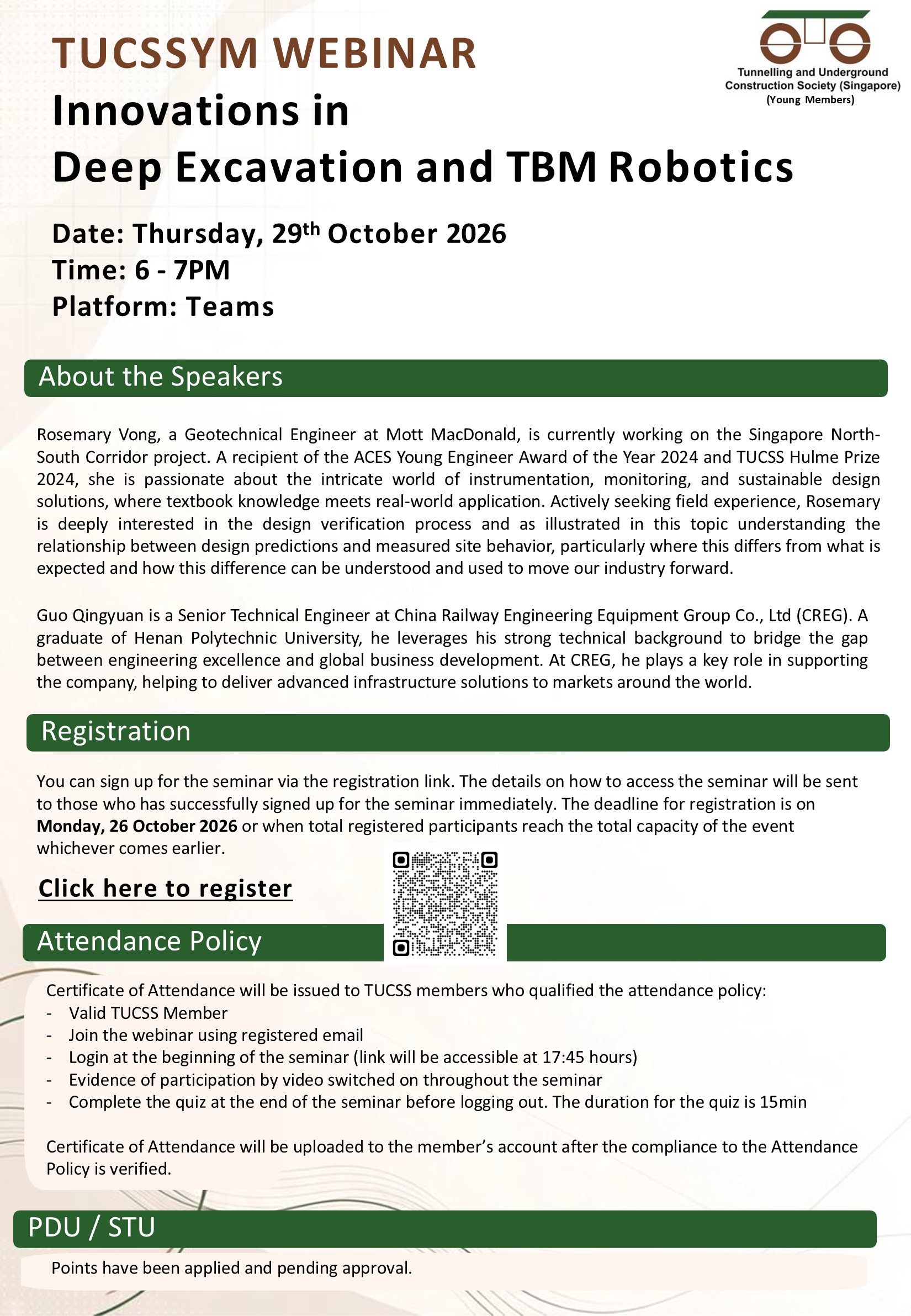
Presentation 2 - Technology and Application of Robots in Tunnelling Construction Process
With the advancement of intelligent and automated tunnelling, CREG is exploring the application of robotics in key TBM operations, including muck cake removal, cutter replacement, and segment handling and erection. These operations involve confined spaces, heavy loads, repetitive tasks, and safety risks. Robotic technologies offer the potential to reduce personnel exposure to hazardous environments and alleviate manual workload. This presentation reviews the applications, technical challenges, and prospects of robotics in TBM construction, focusing on construction safety, manpower reduction, and intelligent equipment integration, providing a reference for the development of intelligent tunnelling equipment.
About the Speakers
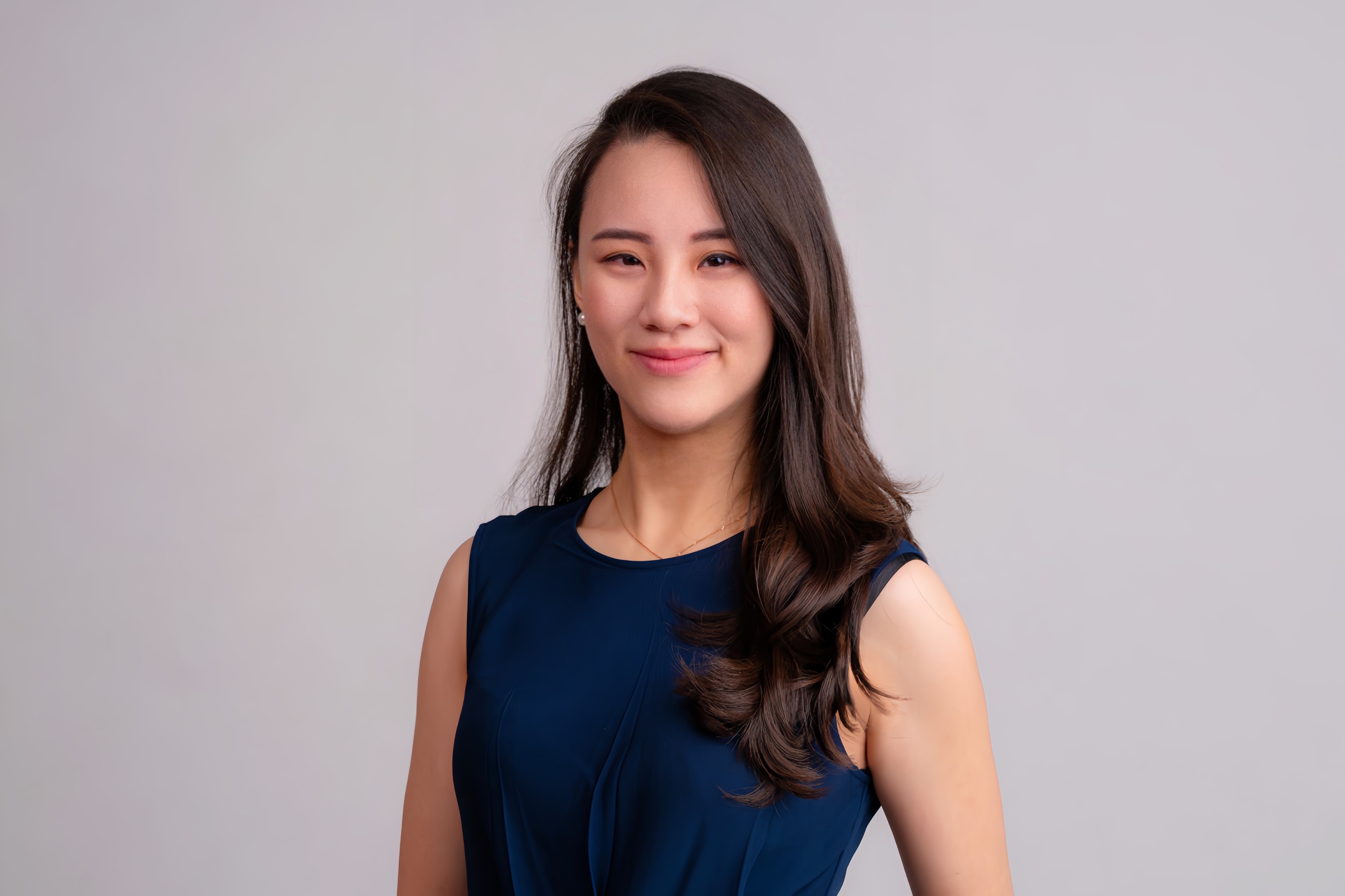
Rosemary Vong, a Geotechnical Engineer at Mott MacDonald, is currently working on the Singapore North-South Corridor project. A recipient of the ACES Young Engineer Award of the Year 2024 and TUCSS Hulme Prize 2024, she is passionate about the intricate world of instrumentation, monitoring, and sustainable design solutions, where textbook knowledge meets real-world application. Actively seeking field experience, Rosemary is deeply interested in the design verification process and as illustrated in this topic understanding the relationship between design predictions and measured site behavior, particularly where this differs from what is expected and how this difference can be understood and used to move our industry forward.
Guo Qingyuan is a Senior Technical Engineer at China Railway Engineering Equipment Group Co., Ltd (CREG). A graduate of Henan Polytechnic University, he leverages his strong technical background to bridge the gap between engineering excellence and global business development. At CREG, he plays a key role in supporting the company, helping to deliver advanced infrastructure solutions to markets around the world.
Registration
You can sign up for the seminar via the registration link. The details on how to access the seminar will be sent to those who has successfully signed up for the seminar immediately. The deadline for registration is on Monday, 26 October 2026 or when total registered participants reach the total capacity of the event whichever comes earlier.
Certificate of Attendance will be issued to TUCSS members who qualified the attendance policy:
- Login at the beginning of the seminar (link will be accessible at 17:45 hours)
- Evidence of participation by video switched on throughout the seminar
- Complete the quiz at the end of the seminar before logging out. The duration for the quiz is 15min
Certificate of Attendance will be uploaded to the member’s account after the compliance to the Attendance Policy is verified.
PDU/STU
Points have been applied and pending approval.